Goat Shed Management
- During the rainy season, proper goat-shed management is crucial. Prevent waterlogging inside the shed.
- Keep the shed well-ventilated. If humidity is high, use fans to maintain dryness.
- At night, protect goats from cold by covering the shed with tarpaulin or closing windows, while still allowing airflow.
- Kids (baby goats) need warmth; provide 100–200 watt bulbs for heating.
- Ensure proper disposal and management of goat dung and urine.
Fodder Management
- During heavy rains, goats are often tied in one place all day and cannot graze. Hence, fodder must be provided at their shelter.
- The fodder should not be wet or damp; ensure it is completely dry.
- Due to humidity, stored fodder may develop fungus. Eating such fodder can harm goat health.
- Farmers should dry green fodder before feeding.
- Proper fodder management helps prevent diseases like diarrhea and indigestion.
Vaccination
- Excess rainfall increases the risk of various diseases in goats.
- In heavy rainfall areas, goats must be vaccinated against Enterotoxaemia.
- Standing in wet, muddy places often leads to Foot rot, while eating fungus-infected fodder causes diarrhea and indigestion. To control these, goats should receive the ETV (Enterotoxaemia vaccine).
- Rainy conditions also increase cases of cold and pneumonia; farmers should seek prompt treatment.
Disposal of Dead Animals
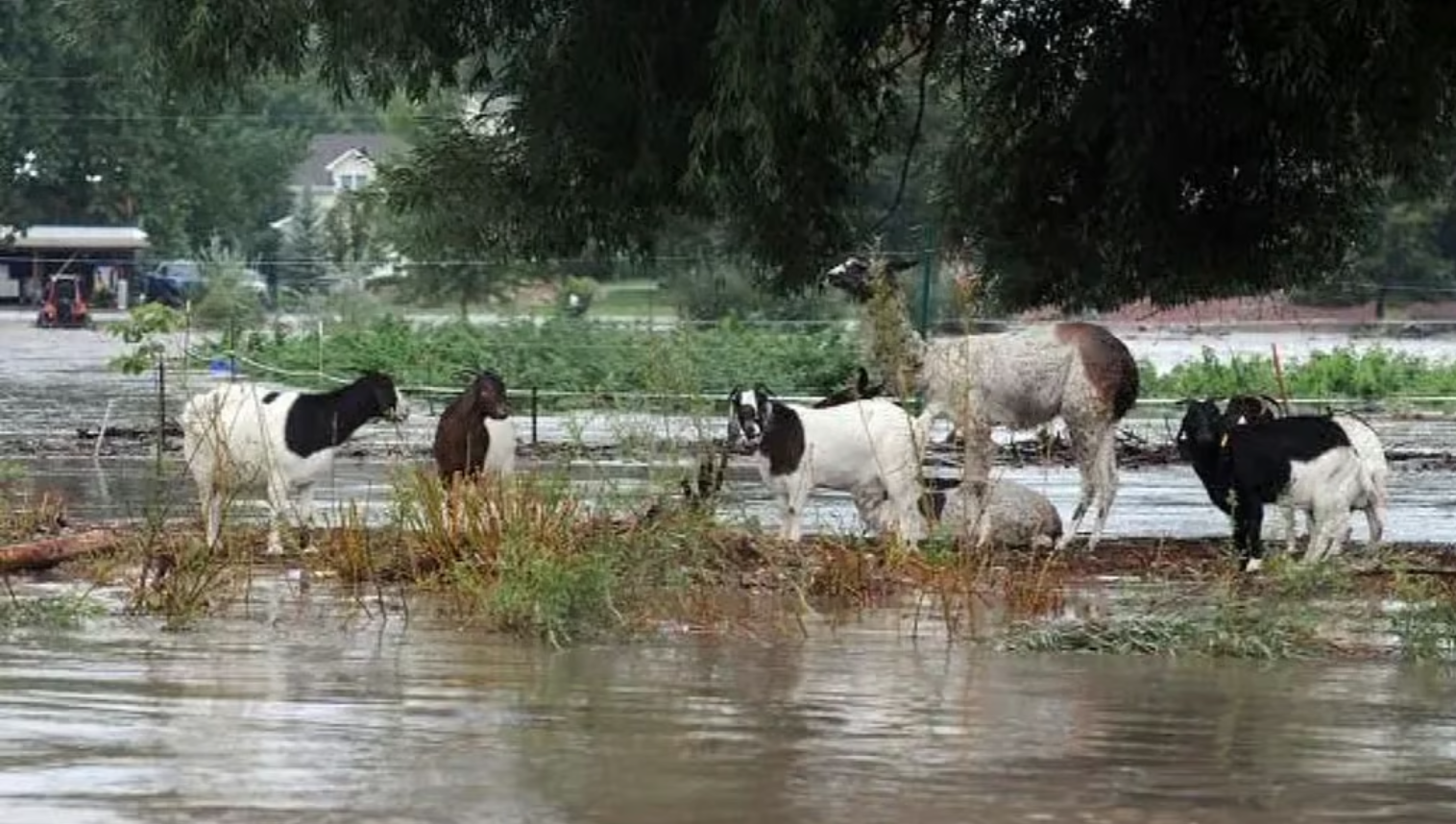
- Heavy rains may cause animals to drown or die, making proper disposal of carcasses essential.
- If carcasses remain near sheds or drinking water sources, they endanger both goat and human health by spreading disease.
- Therefore, animal carcasses should be disposed of scientifically by burning or deep burial.
Frequently Asked Questions (FAQs):
- How should a goat shed be maintained during floods?
It should be airy, dry, and free from waterlogging. - What type of fodder should be given to goats?
Provide dry, fungus-free green fodder. - Which vaccinations are necessary for goats during heavy rains?
Vaccinations against Enterotoxaemia (ETV) are essential. - Which diseases are more common in goats during monsoon?
Foot rot, diarrhea, indigestion, cold, and pneumonia. - How should dead goats be disposed of?
By scientific methods – burning or deep burial.